

On this page
Preview Summary
In a studio apartment, your kitchen, dining area, and living space often share the same room. That makes finding the right trash can especially important. A large bin can get in the way, but a tiny one may need emptying several times a day. The best option depends on where you prepare food, how much trash you produce, and whether you have available cabinet or wall space. This guide covers seven practical ways to handle trash, recycling, and food scraps without crowding a small home. You'll learn when to choose a slim step can, a compact sensor model, a cabinet-mounted bin, or a small compost caddy, plus what to measure before buying. The goal is a setup that's practical and easy to maintain.
Quick Answer
For most studio apartments, a slim trash can beside the kitchen cabinets is a practical option. If floor space is especially limited, consider a bin installed inside a suitable cabinet or a small food-waste caddy hanging from a cabinet door. A compact step can works well when you want hands-free opening without batteries, while a sensor model can be convenient during cooking. Measure the available width, depth, and height, then check how the lid opens before choosing.
Where to Put Your Trash Can in a Studio Apartment
In a studio apartment, the kitchen is often just steps away from your living and sleeping areas. A trash can that blocks a drawer or extends into a walkway can quickly become a daily inconvenience. Food odors may also spread throughout the room more easily than in a separate kitchen. Rather than buying the largest bin that fits, consider how you cook, how often you take out the trash, and where you can reach the bin without moving furniture.
One well-placed main trash can may be enough if you cook occasionally. If you cook most evenings, a small caddy for food scraps may also help. If your building provides separate recycling collection, set aside space for recyclables too. Follow your local collection rules when deciding what belongs in each container.
1. Choose a Slim Trash Can Beside the Cabinets
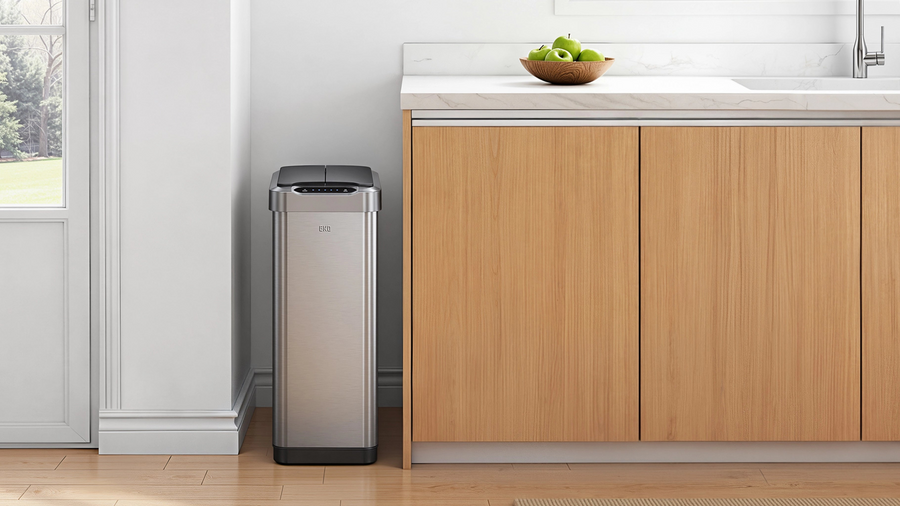
A slim rectangular trash can is often the simplest choice for a small kitchen. It can sit at the end of a row of cabinets, near the refrigerator, or along an unused section of wall. A narrow design is especially useful when a standard round can would extend into the walkway.
Measure the width between the cabinet and the nearest obstacle, then look at the bin's depth. Make sure there's enough room to use the pedal or sensor easily. A bin that technically fits but blocks a cabinet door isn't practical for everyday use.
For more detail on comparing widths and lid styles, see Best Slim Trash Cans for Small Spaces.
2. Use a Compact Step Can for Everyday Trash
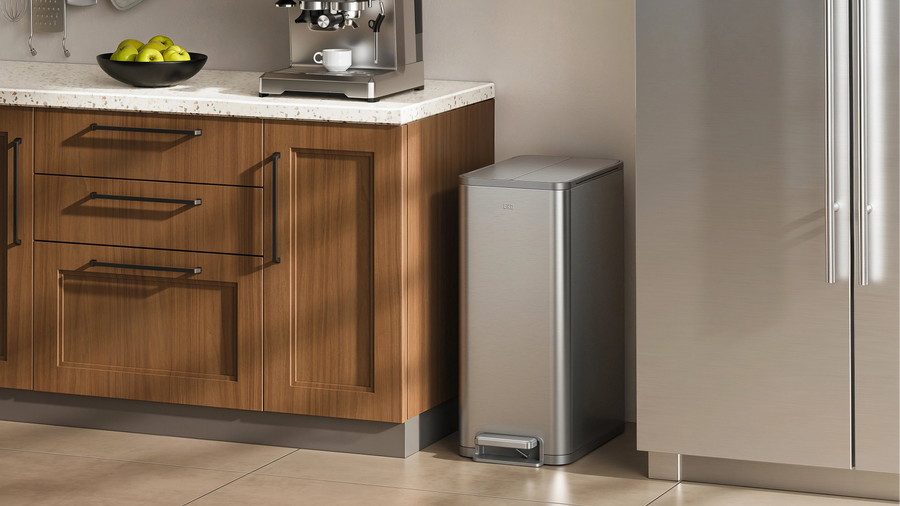
A step can lets you throw away scraps without touching the lid. The foot pedal offers simple, hands-free operation. For a studio apartment, choose a model that fits neatly beside your cabinets and leaves enough room to use the pedal easily.
Consider how often you cook before choosing a size. A very small bin can work for small amounts of everyday trash, but frequent bag changes may become inconvenient. If you regularly prepare meals at home, a slightly larger slim trash can may be more practical than using a tiny countertop container for all your trash.
3. Consider a Slim Sensor Can Near Your Prep Area
A sensor trash can opens when it detects your hand, which is helpful when your hands are wet or messy. Place it near the area where you chop vegetables or clear plates, but avoid spots where people frequently walk past the sensor.
Check the lid-open height, especially if the bin will sit under a countertop overhang. Sensor models typically run on batteries, so follow the manufacturer's recommendations for your specific model. If you prefer a simpler, battery-free option, a step can may be a better fit.
4. Install a Trash Can Inside a Suitable Cabinet
If you want to save floor space, a pull-out trash can installed inside a suitable cabinet can be a practical solution. Some models use sliding rails so you can pull the container forward when needed. This setup works best when the cabinet has enough width, depth, and height for both the bin and its hardware.
Measure the inside of the cabinet rather than relying on its outside dimensions. Allow for plumbing, hinges, shelves, and other obstructions. You'll also need room to pull out the bin and lift out the inner liner when changing bags. Installation requirements vary, so review the product instructions and confirm that the cabinet is suitable for the hardware before buying.
5. Hang a Small Compost Caddy on a Cabinet Door
A hanging compost caddy attaches directly to a suitable cabinet door, keeping food scraps within easy reach while you prepare meals. It's a practical way to save floor space and keep your kitchen organized. Depending on the product and your layout, you can hang it on the inside or outside of the door.
The EKO 7L Kitchen Compost Bin is one example. Its removable inner liner makes emptying easier, while the built-in deodorizer compartment holds odor-control material. If you hang the caddy inside a cabinet, make sure the door can still close properly; shelves, hinges, and stored items may limit the space. Hanging it outside keeps food scraps close at hand while you cook.
A small food-waste caddy gives you a separate place to collect scraps alongside your main trash can. If you don't compost locally, follow your building's rules for food-waste disposal.
6. Keep Recycling in a Separate Compact Container
Recycling can take up more room than expected, especially when bottles and cardboard pile up between pickup days. In a studio apartment, a separate recycling bin works best when you have a convenient spot for it. A narrow bin beside your main trash can may fit; otherwise, consider a small container inside a cabinet or pantry.
Rinse or empty recyclable containers as required by your local program, and flatten clean cardboard when accepted. Don't assume every type of plastic packaging belongs in recycling. Local rules vary, and keeping items your program doesn't accept out of the recycling bin helps reduce contamination.
For guidance on common recycling questions, see the U.S. Environmental Protection Agency’s recycling FAQ: https://www.epa.gov/recycle/frequent-questions-recycling
7. Choose a Small Bin for the Bathroom or Work Area
A studio may benefit from an additional small trash can in another area, particularly near the bathroom sink or desk. A compact step can works well for bathroom waste, while a basic compact bin may be enough for dry paper waste near a workspace.
Avoid adding extra bins simply because you have several corners available. Every container needs cleaning and emptying. Start with one main kitchen bin, then add a smaller one only where it saves repeated trips across the apartment.
Compare the Seven Options
|
Option
|
Best for
|
Check before buying
|
|
Slim bin beside cabinets
|
Everyday kitchen trash
|
Check width, depth, and access to nearby doors
|
|
Compact step can
|
Hands-free opening without batteries
|
Leave room for the pedal and lid
|
|
Slim sensor can
|
Touchless disposal during cooking
|
Check sensor placement and lid-open height
|
|
Cabinet-installed bin
|
Keeping the kitchen floor clear
|
Measure inside cabinet and hardware clearance
|
|
Hanging compost caddy
|
Food scraps during meal prep
|
Check cabinet-door clearance
|
|
Separate recycling container
|
Bottles, cans, and accepted packaging
|
Follow local recycling rules
|
|
Small bathroom or desk bin
|
Waste away from the kitchen
|
Choose a size you will empty regularly
|
How to Choose the Right Setup for Your Studio
Measure the Space Before Choosing a Bin
Measure the available width and depth where you plan to place the trash can. If it will sit below a counter, measure from the floor to the underside of the countertop and compare that distance with the lid-open height. For a bin inside a cabinet, measure the interior width, depth, and height and account for pipes or shelves. Use the smallest measurement for each dimension when comparing models.
Consider Your Daily Trash Needs
If you cook at home most nights, choose a main kitchen bin that can handle food packaging and everyday cleanup. If you mostly eat out, a smaller bin may be enough. Empty food waste regularly instead of choosing a larger container simply to avoid changing bags. For recycling, consider your building's collection schedule and how quickly packaging accumulates.
Check How the Lid Opens
A step can needs enough room to use the pedal and open the lid. A sensor lid needs room to rise and shouldn't open every time someone walks past. A swing lid requires touching the lid but can suit areas with less foot traffic. Pull-out cabinet bins need room to slide forward, while hanging caddies must not prevent the cabinet door from closing.
Choose a Finish That Fits Your Kitchen
A trash can doesn't need to match every appliance exactly. Stainless steel pairs well with stainless steel appliances, while black or white may blend naturally with your cabinets and other kitchen details. What matters more is finding a trash can that fits where you need it and is easy to wipe clean.
EKO Trash Can Options for Small Apartments
For a compact kitchen, start with a slim EKO step or sensor trash can beside your cabinets. Choose the opening style based on how you cook and how much clearance you have above the lid. If you regularly prepare fruits and vegetables, the EKO 7L Kitchen Compost Bin can hang on a suitable cabinet door to collect scraps near your prep area. If you have enough cabinet space and prefer to keep the floor area free of a trash can, consider a pull-out EKO bin instead.
You don't need every option. For many studio apartments, one main trash can and a smaller bin, if needed, can keep things organized without overcrowding the space. Explore EKO's trash and recycling collection: https://ekousa.com/collections/trash-recycling
Make the Most of the Space You Already Have
Keeping a studio apartment tidy doesn't have to be complicated. Start with a main trash can that fits your space, then add a smaller bin if you need one for recycling, food scraps, or bathroom waste. Measure carefully, consider how each lid opens, and make sure you can still access cabinets and appliances easily. With a little planning, everyday cleanup can be simpler without sacrificing valuable floor space.
Related Reading and Sources
-
Best Slim Trash Cans for Small Spaces
-
Where to Put a Trash Can in a Tiny Kitchen
-
Narrow Trash Cans That Fit Between Cabinets
-
Best Trash Cans for Kitchen Islands and Cabinets
-
U.S. EPA — Recycling FAQs: https://www.epa.gov/recycle/frequent-questions-recycling
-
U.S. EPA — Reduce, Reuse, Recycle: https://www.epa.gov/recycle