

On this page
Preview Summary
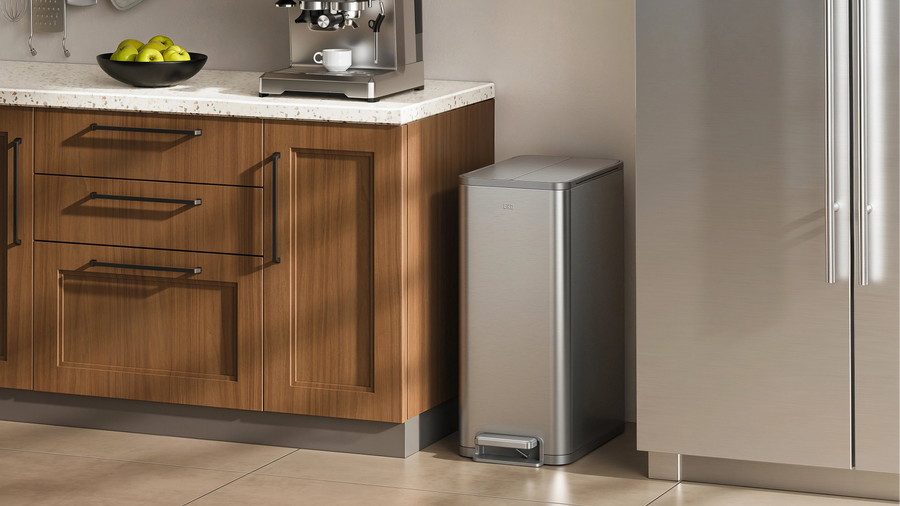
A narrow gap between kitchen cabinets might seem like the perfect spot for a trash can. But even if a trash can fits on paper, it may not be practical if the lid hits the counter, the pedal is hard to reach, or there's not enough room to change the liner. This guide explains how to measure your space, choose the right capacity, and compare slim step and sensor trash cans. It also covers the difference between placing a trash can beside a cabinet and between two cabinets, plus what to consider when doors or appliances are nearby. You'll find a simple measuring checklist, common mistakes to avoid, and EKO options to explore. The goal is to find a trash can that fits and is easy to use every day.
Quick Answer
To find a narrow trash can that fits between cabinets, measure the available width, depth, and height. Then compare those measurements with the product's actual dimensions, including the space needed to open the lid. Leave enough room to use the trash can easily instead of choosing one that fills the gap completely. If the space is beneath a countertop, pay particular attention to lid-open height. A slim step can works well when the pedal is easy to reach, while a sensor can needs a clear area for the lid and sensor to operate.
What Counts as a Narrow Trash Can?
A narrow trash can is designed for spaces where a standard kitchen bin may be too wide. Some models have an especially narrow profile, while others have a shallower depth so they don't extend too far into the room. The difference matters: a tall, slim can might fit between two cabinets, while a shorter model could be better beside a refrigerator when height is limited.
There's no standard width that makes a trash can 'slim.' Retailers use the term for different shapes and sizes, so focus on actual dimensions rather than the label. When comparing models, review their widths and depths, and see whether the lid extends beyond the body when opened.
Measure the Gap Before You Shop
1. Measure the width at three heights
Measure near the floor, halfway up, and just below the counter or shelf. Cabinet trim, baseboards, and uneven walls can reduce the available width in certain areas. If the measurements differ, compare product dimensions with the narrowest width. If a cabinet door swings into the gap, open it fully and check how much space remains.
2. Check the usable depth
Measure from the back wall to the edge of the walkway, making sure the trash can won't extend too far into the space. Account for baseboards, pipes, outlets, and appliance handles. A deep bin may technically fit between cabinets but still get in the way.
3. Measure the height with the lid open
The height with the lid closed doesn't tell the whole story if you're placing a bin under a countertop. Check the manufacturer's lid-open height against the available space. Some lids lift straight up; others swing backward or open in two sections. If the opening height isn't listed, confirm the clearance before ordering.
4. Make Sure It's Easy to Use
Think about how you'll throw away food scraps, remove a full bag, and clean the bin. The lid should open fully, and you should be able to lift out the inner liner if the model has one. If you have to pull the trash can out of its spot every time you change the bag, a different size or location may be more practical.
A Quick Measuring Checklist
|
Check
|
What to record
|
Why it matters
|
|
Width
|
Narrowest point of the gap
|
Cabinet trim may reduce the opening
|
|
Depth
|
Usable space before the walkway
|
Helps keep the bin out of the walkway
|
|
Closed height
|
Floor to the top of the bin
|
Confirms the body fits
|
|
Lid-open height
|
Full height during opening
|
Avoids hitting the counter
|
|
Access
|
Pedal, sensor, and liner clearance
|
Helps make everyday use easier
|
Choose the Right Lid for a Tight Space
Slim Step Trash Cans
A step can opens when you press the pedal, which is useful during cooking when your hands are full. Before choosing one for a narrow gap, check that your foot can reach the pedal without bumping the cabinets. You should also have room to stand comfortably in front of the bin. A soft-close lid can make daily use quieter, while a stay-open feature may be helpful when changing liners or cleaning up after a meal.
A step can can be harder to use if a kitchen island overhang blocks the pedal or a cabinet door swings in front of it. Before buying, make sure you can reach the pedal and open the lid without anything getting in the way.
Slim Sensor Trash Cans
A sensor lid opens when it detects your hand, so you can throw away scraps without touching the bin. This can be useful when your hands are wet or messy. However, the sensor needs a clear area in which to detect movement, and the lid still needs space to open. A low counter or nearby cabinet door may interfere with either one.
Follow the manufacturer's battery recommendations for your specific EKO sensor model. If you plan to place it under a counter, make sure the sensor and lid can operate properly in that location.
Swing-Lid and Open-Top Options
A swing-lid trash can can work well in a narrow pantry or utility area where touchless opening isn't a priority. Because you need to push the lid, it may be less convenient when disposing of messy food scraps. An open-top can offers easy access, but it may not be ideal for food waste or for households that prefer to keep trash covered.
How Much Capacity Do You Need?
A narrow trash can does not need to hold as much as your main kitchen bin. The right size depends on how many people use the kitchen, how often you cook, and whether you separate recycling or food scraps. A small bin may work well for one person or for a dedicated recycling category. A larger slim model may suit a household that prepares most meals at home.
Don't automatically choose the biggest trash can that fits. Make sure there's enough room to remove the inner liner and lift out a full trash bag without difficulty. If a larger model blocks cabinet doors or extends into the walkway, a slightly smaller one may be more practical.
|
Kitchen situation
|
What to prioritize
|
|
Very tight gap beside cabinets
|
Width, lid movement, and liner access
|
|
Gap under a counter
|
Lid-open height and sensor clearance
|
|
Busy family kitchen
|
Convenient opening and manageable bag changes
|
|
Recycling beside the main bin
|
Capacity that matches how often materials are emptied
|
|
Narrow passage or galley kitchen
|
Shallow depth and clear walking space
|
Where a Narrow Trash Can Works Best
Beside the End Cabinet
The end of a row of cabinets is often a convenient place for a trash can, especially near your food prep area. Keep it within easy reach without blocking drawers or appliance doors. A rectangular design can fit neatly against the cabinet side, but make sure the lid won't hit a nearby wall or cabinet handle.
Between a Cabinet and an Appliance
A gap beside a refrigerator or dishwasher may look useful, but check the appliance door first. Refrigerator handles, dishwasher doors, and ventilation requirements can limit the usable space. Never block an appliance vent or place a bin where it prevents a door from opening fully. If the refrigerator door swings into the gap, choose another location.
At the End of a Kitchen Island
A slim trash can at the end of an island can be easy to reach while preparing meals. Make sure it doesn't narrow the walkway or interfere with stools. If people often pass that corner, a shallower model positioned close to the island may be a better fit.
Under a Countertop
A low counter can limit which lids will work. Compare the full opening height and confirm you can reach the controls. If you would need to slide the bin out every time you throw something away, consider a different spot or a cabinet-mounted option designed for that purpose.
When a Cabinet-Mounted Bin Makes More Sense
If you don't have enough floor space, a pull-out trash can installed inside a cabinet may be a better option. It keeps the trash can out of sight while providing convenient access, as long as the cabinet has enough room for the unit, mounting hardware, and door to operate properly.
For food scraps, a compact hanging compost bin offers another convenient option. The EKO 7L Kitchen Compost Bin can hang on the inside or outside of a suitable cabinet door, keeping peels and trimmings near your prep area. Its removable inner liner and deodorizer compartment make it useful for collecting small amounts of food waste. Make sure the door thickness and available clearance are compatible before installing it.
EKO Options to Consider
EKO offers a range of trash cans for different kitchen layouts. Since not every slim model fits every narrow space, compare the dimensions on each product page before ordering.
A Slim Step Can for Narrow Spaces
A slim step can is a practical choice when the space is narrow but you can easily reach the pedal. Look for a lid that opens without hitting the countertop and a removable inner liner if easy cleaning is important to you. Browse EKO's trash and recycling collection for current slim step options, and confirm the measurements for the exact size and finish you're considering.
A Compact Sensor Can for Hands-Free Use
A compact sensor trash can can work well beside a cabinet or at the end of an island, especially if you often throw away scraps while cooking. Review its sensor placement, lid-open height, and battery requirements. A slim profile alone doesn't mean the sensor will work properly under a low shelf.
A Hanging Compost Bin for Food Scraps
Instead of taking up valuable floor space, the EKO 7L Kitchen Compost Bin hangs directly on a suitable cabinet door, keeping food scraps within easy reach while you cook. Depending on your kitchen layout, you can hang it on the inside or outside of the door. Check compatibility and clearance before installation.
Mistakes to Avoid When Buying a Narrow Trash Can
-
Checking only the width. Depth and lid-open height can be just as important.
-
Measuring at only one point. Baseboards and cabinet trim may narrow the opening.
-
Ignoring nearby doors. A dishwasher, refrigerator, or cabinet door may swing into the bin.
-
Forgetting the pedal or sensor. You need room to operate the lid comfortably.
-
Choosing capacity before fit. A larger bin isn't practical if it gets in the way.
-
Assuming every slim bin uses the same liner. Check the recommended bag size for the specific model.
The Bottom Line
The best narrow trash can isn't necessarily the narrowest or the largest. It's one that fits your kitchen, opens easily, and lets you change the liner without blocking nearby cabinets. Measure the gap carefully, consider how you'll use the trash can every day, and look beyond the bin's closed dimensions before choosing.
Explore More EKO Kitchen Guides
Browse EKO trash and recycling: https://ekousa.com/collections/trash-recycling
References and Practical Resources
U.S. EPA — Reducing Waste: https://www.epa.gov/recycle/reducing-waste-what-you-can-do
U.S. EPA — Composting at Home: https://www.epa.gov/recycle/composting-home
U.S. Department of Energy — Refrigerators and Freezers: https://www.energy.gov/energysaver/refrigerators-freezers