

On this page
Preview Summary
In a tiny kitchen, every inch of space counts. Fortunately, you don't have to sacrifice valuable floor space to keep your trash can within easy reach. Start by looking at the space you already have: the cabinet under the sink, the inside or outside of a cabinet door, and narrow gaps beside cabinets or appliances. Each option has its own advantages, especially when you consider how the lid opens, how cabinet doors swing, and how easy it is to change the liner. This guide covers practical trash can placement ideas for apartments, galley kitchens, and compact cooking areas. You'll learn which trash can styles work best in different spots, what to measure before buying, and how to keep your trash can convenient without getting in the way.
QUICK ANSWER
The best place for a trash can in a tiny kitchen is usually under the sink, on a suitable cabinet door, or in a narrow gap beside the cabinets. A pull-out trash can works well for everyday waste if there's enough space inside the cabinet for installation and liner changes. A hanging food waste bin can hang on the inside or outside of a cabinet door, keeping scraps close at hand during meal prep. If neither option fits, consider a slim step or sensor trash can beside the cabinets, as long as there's enough room to open the lid and use the pedal or sensor.
Start With the Space You Already Have
Before shopping for a smaller trash can, pay attention to how you move through your kitchen. Where do you chop vegetables? Where do you clear plates? Which cabinet doors do you open most often? Even if a trash can fits perfectly into a gap, it won't be convenient if you have to move it every time you cook.
In a galley kitchen, the walkway between two rows of cabinets can get crowded. An under-cabinet or door-mounted trash can helps keep the walkway unobstructed. In a one-wall apartment kitchen, a narrow can at the end of a row of cabinets may be easier to reach. If you use a kitchen island for food prep, a small hanging bin near your work area can be more useful than a large trash can across the room.
1. Inside the Cabinet Under the Sink
The cabinet under the sink is often the first place to look. Keeping trash inside the cabinet saves valuable floor space and keeps the can out of sight when the door is closed. However, plumbing, a garbage disposal, water filters, or cleaning supplies may leave you with less usable space than you think.
Measure the usable width, depth, and height inside the cabinet. Make sure you can open the cabinet door fully and easily remove the trash can for cleaning. If you're considering a pull-out trash can, review the installation requirements and make sure the rails won't interfere with pipes or hinges.
A pull-out trash can is a practical option for regular household trash or a combined trash-and-recycling setup. It generally offers more capacity than a small food waste caddy, although it requires a little more planning to install. Confirm whether the unit mounts to the cabinet floor or another surface, and follow the product instructions.
2. Hanging on a Cabinet Door
A compact hanging food waste bin is another way to make use of cabinet space. Unlike a pull-out trash can, it attaches to a suitable cabinet door instead of moving along rails on the cabinet floor. This can be especially helpful when plumbing or cleaning supplies take up most of the space beneath the sink.
The EKO hanging kitchen food waste bin can hang on the inside or outside of a suitable cabinet door, depending on your layout. Hanging it inside keeps it out of sight when the door is shut. Placing it outside keeps food scraps within easy reach while you prepare meals. Review the door thickness, clearance, and installation instructions before setting it up.
These two options serve different purposes. A larger pull-out trash can is ideal for everyday household trash or recycling, while a hanging food waste bin keeps vegetable peelings, fruit scraps, and other food waste close at hand during meal prep. You can use both if your kitchen layout allows it.
3. At the End of a Row of Cabinets
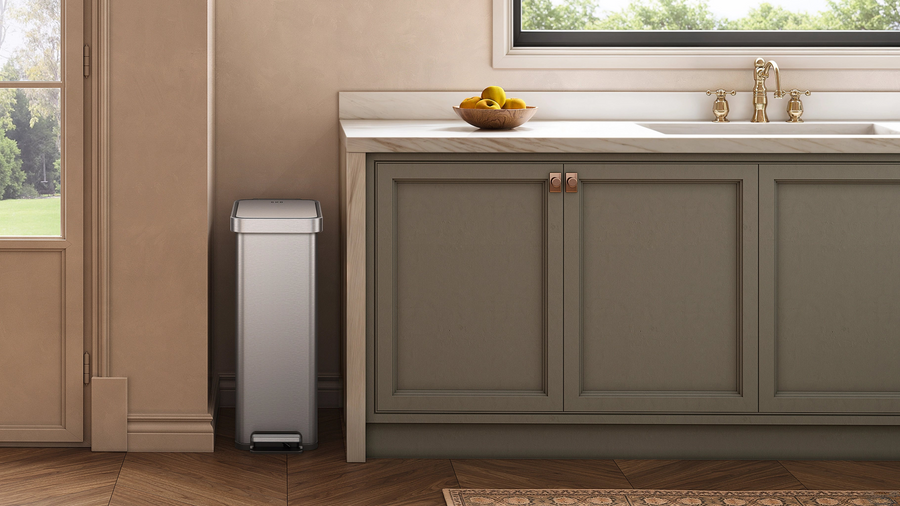
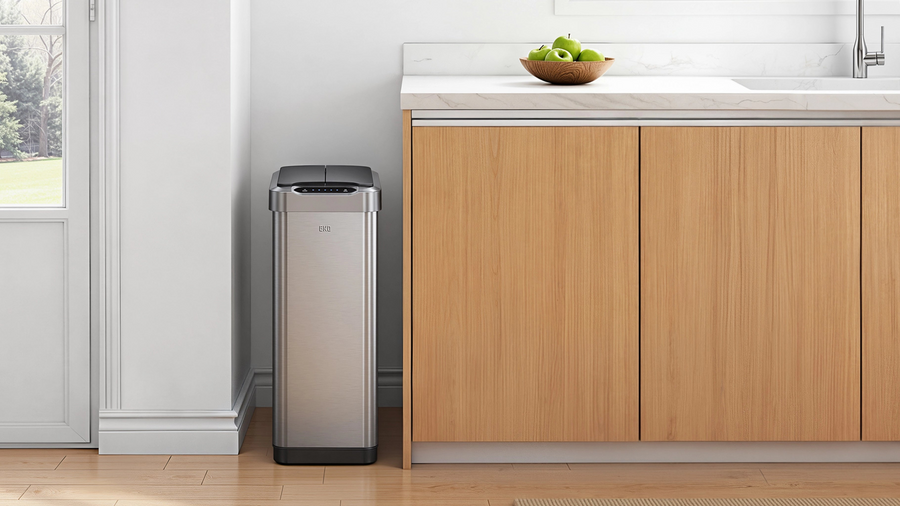
If you're short on cabinet space, a slim trash can at the end of a row of cabinets can be a practical choice. It keeps the trash can close to where you need it without getting in the way. A rectangular design often fits neatly against the side of a cabinet, but the actual measurements matter more than the shape alone.
Measure the available width, leaving enough room to use the foot pedal or sensor easily. A step can needs clear access to its pedal, while a sensor can needs enough clearance above the lid to open properly. If the bin sits beside a refrigerator or dishwasher, make sure the appliance door can still open fully.
Avoid squeezing a can so tightly into a gap that you can't lift out the inner liner or clean around it. A slightly smaller bin that's easy to use is usually a better choice than the biggest can you can squeeze into the space.
4. Between Cabinets or Appliances
That narrow gap between cabinets might seem like the perfect spot for a trash can, but don't assume it'll fit. Measure the space at both the front and back, since walls and cabinets aren't always perfectly straight. Look for baseboards, trim, or appliance feet that could reduce the usable width.
Look beyond the bin’s closed dimensions. A hinged lid may rise above the counter edge. A pedal needs space in front, while a sensor should not sit where a countertop overhang might trigger it unexpectedly. If the gap is next to an oven, follow the appliance manufacturer’s clearance guidance and avoid placing a plastic bin against a hot surface.
This placement works best when the gap is easy to reach and doesn't block drawers or appliance doors. If the space is awkward, don't force a bin into it just to use every inch.
5. Near the Main Food Prep Area
Easy access matters just as much as size. If you prepare most meals at one counter, keep your everyday trash can or food waste bin nearby. That makes it easier to toss packaging and food scraps as you cook instead of carrying them across the kitchen.
For kitchens with very little counter space, hanging a small food waste bin on a nearby cabinet door can be especially useful. If you prefer one larger trash can, place a slim model at the end of a row of cabinets, where it's easy to reach without getting in the way.
Compare the Best Locations for a Tiny Kitchen
|
Location
|
Best for
|
What to check
|
|
Under the sink
|
Everyday trash or recycling
|
Check plumbing, door opening, and installation room
|
|
Inside a cabinet door
|
Food scraps during prep
|
Check door clearance and the bin’s depth
|
|
Outside a cabinet door
|
Quick access to food scraps
|
Make sure it does not block drawers or walkways
|
|
Beside an end cabinet
|
Everyday trash
|
Check width, lid-open height, and pedal access
|
|
Between cabinets or appliances
|
A slim everyday trash can
|
Check appliance doors, heat, and access for liner changes
|
What to Measure Before Buying
A trash can needs to be easy to open, empty, and clean—not just small enough to fit. Take these measurements before choosing a model:
-
Available width: measure the narrowest point, including trim and cabinet hardware.
-
Depth: make sure the bin will not extend past the cabinet too far or block a walkway.
-
Height with the lid closed and open: leave room for the lid to rise or swing.
-
Door clearance: make sure nearby drawers, cabinet doors, and appliance doors can open fully.
-
Access for liner changes: make sure you can remove the inner liner or lift out the bag.
Write down the measurements in inches and compare them with the product specifications. Do not rely on the word “slim” alone: two cans described that way may have very different dimensions.
Choose the Right Opening Style for the Location
Step cans
Step cans work well beside cabinets when you can reach the pedal without moving the bin. They're a convenient choice for everyday kitchen use and don't require batteries. Make sure there's enough clearance for the lid if the can will sit beneath a countertop overhang.
Sensor cans
Sensor cans open when they detect your hand, so you can throw away scraps without touching the lid. They work best where the sensor and lid have enough clearance. Avoid placing one directly beneath a low shelf or in a spot where nearby movement could trigger the lid.
Pull-Out Cabinet Trash Cans
A pull-out trash can stays inside the cabinet when not in use. It's a good option if you want to avoid using extra floor space and have room for the mounting hardware. Measure the cabinet's interior and review the installation instructions before buying.
Hanging food waste bins
A hanging food waste bin is handy for collecting scraps near your cutting board. It can hang on the inside or outside of a suitable cabinet door, depending on your setup. It's a useful addition to your kitchen, giving you a convenient place for food scraps while keeping regular household trash separate.
Small-Kitchen Mistakes to Avoid
Buying the narrowest can without checking its height is a common mistake. The lid may hit the countertop even when the body fits perfectly. Another problem is placing a can in front of the dishwasher or a frequently used drawer. Test the full movement of nearby doors before choosing a location.
Don't overlook bag changes, either. If the can is difficult to pull out or the inner liner catches on a cabinet edge, cleaning becomes a hassle. Finally, consider how quickly you fill the bag. A very small can may save space but require more frequent changes than you'd like.
EKO Options to Consider
For a narrow spot beside a cabinet, explore EKO slim step and sensor trash cans. Compare the exact dimensions, lid movement, and capacity rather than choosing based on appearance alone. The EKO trash and recycling collection is a useful place to compare available designs: https://ekousa.com/collections/trash-recycling
For a cabinet-based setup, compare a pull-out trash can with an EKO hanging food waste bin. The first is designed for larger amounts of everyday trash or recycling; the second keeps food scraps nearby while cooking and can hang on the inside or outside of a suitable cabinet door. Choose based on what you throw away most often and the available cabinet space.
Make Room for What Matters
Making room for a trash can in a tiny kitchen doesn't have to be difficult. Start by making the most of your existing cabinet space, then consider a slim design if you need a little extra flexibility. Measure carefully, keep the bin near where you cook, and make sure you can open the lid and change the liner easily. For more ideas, see Best Slim Trash Cans for Small Spaces.
Related Reading and Sources
Related kitchen guides: Best Slim Trash Cans for Small Spaces; Trash Can Placement Ideas for Small and Large Kitchens; What Size Trash Can Do I Need for My Kitchen?
External reference: U.S. EPA, Reducing Wasted Food at Home — https://www.epa.gov/recycle/reducing-wasted-food-home
External reference: U.S. EPA, Composting at Home — https://www.epa.gov/recycle/composting-home