

On this page
Preview Summary
How many gallons should a kitchen trash can be? For many U.S. households, 13 gallons is a common kitchen size because it holds a useful amount of everyday waste without taking up as much room as a larger bin. But capacity is only one part of the decision. A household that cooks often, has several family members, or does not separate food scraps may fill a 13-gallon bag quickly. A home that recycles and composts regularly may need less space for everyday trash. This guide explains how 8-, 10-, 13-, 16-, and 20-gallon capacities compare, when a larger bin is useful, and why bins with the same capacity can still have very different dimensions. It also covers bag fit, dual-compartment bins, and how to match capacity to your actual kitchen routine.
Quick Answer:
How Many Gallons Should a Kitchen Trash Can Be?
For most everyday kitchens, a trash can in the 12- to 13-gallon range is a useful choice. It provides enough capacity for regular household waste without taking up as much room as a 20-gallon bin. Smaller 8- to 10-gallon cans can work well for lighter waste or kitchens where recycling and composting are separated. A 16- to 20-gallon can may suit larger households, frequent home cooking, or anyone who finds a 13-gallon bag fills too quickly.
Choose capacity based on how much general trash your household actually throws away and how often you want to change the bag. Then check the bin’s dimensions to confirm it fits your kitchen.
Kitchen Trash Can Capacities at a Glance
Kitchen trash cans come in a wide range of capacities. The chart below shows how common gallon ranges typically fit into household routines. These are general guidelines rather than fixed household-size rules.
|
Capacity
|
Typical Use
|
Works Well When
|
Keep in Mind
|
|
5–8 gal
|
Light kitchen waste
|
You take trash out often or separate most recyclables and food scraps
|
May fill quickly after meal prep or entertaining
|
|
8–10 gal
|
Smaller households or compact kitchens
|
Waste volume is moderate and floor space is limited
|
Check bag fit; common kitchen bags may be too large
|
|
12–13.2 gal
|
Typical household kitchen
|
You want a familiar capacity for regular kitchen waste
|
Actual dimensions vary widely by shape
|
|
14–16 gal
|
Moderate to higher waste volume
|
A 13-gallon bin feels slightly too small
|
Needs more room than many standard kitchen cans
|
|
20–21 gal
|
Larger households or frequent cooking
|
You want fewer bag changes and have room for a larger bin
|
Do not let wet or food-heavy waste sit too long
|
Why 13 Gallons Is So Common in Kitchens
The 13-gallon size sits in a useful middle range. It can hold the waste from everyday meal prep and household cleanup while still fitting beside many counters, cabinets, or kitchen islands. It is also a familiar bag size in the U.S., so liners and refills are easy to find.
That does not mean every kitchen needs exactly 13 gallons. The number is most useful as a reference. If you already use a 13-gallon bin, think about what happens during a normal week. If bags are usually comfortably full when you take them out, the capacity is probably working well. If you are replacing bags much more often than you would like, a larger bin may be worth considering. If bags are rarely close to full, you may be able to use a smaller size.
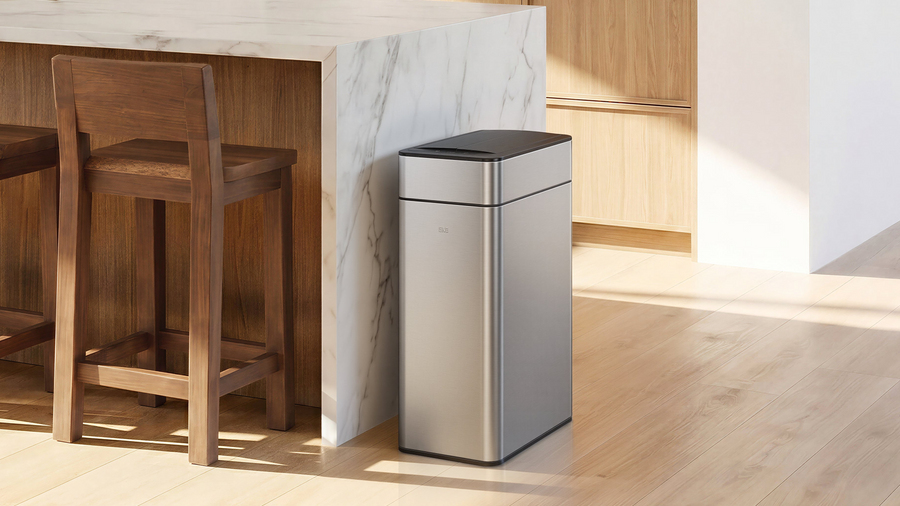
EKO offers several kitchen models around this capacity, including the 50 L / 13 Gal Mirage-T motion sensor can, the 50 L / 13 Gal Marina step can, and the 50 L / 13 Gal Hana Select step can. The X-Wing offers 50 L / 13.2 Gal in a slimmer body with a dual-wing lid. These examples also show why capacity alone does not tell you the exterior size or shape of a bin.
When Should You Choose a 20-Gallon Kitchen Trash Can?
A 20-gallon kitchen trash can makes more sense if you find yourself changing a 13-gallon bag more often than you would like or if your household produces more everyday waste. This may happen in larger households, homes where several meals are prepared each day, or kitchens that handle frequent gatherings.
The main benefit is simple: more capacity means you can fit more waste in each bag. Before moving up in size, however, check where the bin will sit. A 20-gallon model can be wider, deeper, or taller than a 13-gallon model, and lid clearance may also change.
EKO’s Hudson is available in a 75 L / 20 Gal version, while the Mirage-X provides 80 L / 21.1 Gal. These larger options suit kitchens with enough room for a higher-capacity bin and households that would rather change bags less often.
When Does a Larger Trash Can Stop Being Practical?
Yes. Extra capacity is useful only when your household needs it. If a large bag takes a long time to fill, food residue and other wet waste may remain in the kitchen longer than you want. A larger bin can also take up more room beside cabinets or extend farther into an open kitchen area.
The goal is not to buy the largest capacity that fits. It is to choose a size that matches the amount of trash you produce between bag changes. If odor or food waste is the main reason you take the trash out, increasing capacity may not change your routine at all.
How Recycling and Composting Change the Capacity You Need
Your main kitchen trash can does not have to hold everything that leaves the kitchen. If bottles, cans, cardboard, and food scraps are separated, much less may end up in the trash. The U.S. Environmental Protection Agency encourages households to prevent wasted food and, where appropriate, compost food scraps rather than sending them to disposal.
This is why two households of the same size may need different trash capacities. One may fill a 13-gallon bag with mixed waste every few days, while another may send much of that volume to recycling or compost.
If You Separate Recycling
Consider the capacity of both waste streams rather than looking only at the total size of the unit. For example, a dual-compartment can may have 16 gallons of total capacity split into two 8-gallon sections. That is very different from having one 16-gallon space for general trash.
If You Compost Food Scraps
A small countertop or under-sink compost container can remove a noticeable amount of food waste from the main bin. If you already compost consistently, pay attention to what remains in your trash before deciding that you need a larger can.
Gallons vs. Liters: How to Compare Trash Can Capacity
Kitchen bins are often labeled in both liters and gallons. The conversion is useful when comparing products, but the numbers may be rounded in product listings. A 50-liter bin is about 13.2 U.S. gallons, so one model may be listed as 13 gallons while another may show 13.2 gallons even though both are around 50 liters.
For everyday buying decisions, the listed capacity is usually enough to compare models. If exact fit or volume matters, check the product dimensions and detailed specifications too. Two bins listed around 13 gallons can have different widths, depths, lid shapes, and internal layouts.
Does a 13-Gallon Bag Fit Every 13-Gallon Trash Can?
Not always. Bag fit depends on more than the capacity printed on the box. The shape of the bin, the width of the opening, the depth of the liner, and the way the bag is secured can all affect how well a liner fits.
A bag that is technically large enough may still feel too tight around a wide rim or leave too much material hanging over the edge. Check the trash can manufacturer’s liner recommendation when one is available. EKO, for example, lists Code F 13-gallon bags for compatible 50 L / 13 Gal models.
If you use another bag brand, compare the bag dimensions as well as the gallon rating. This is especially useful for tall, slim, or unusually wide bins.
Capacity Does Not Tell You How Much Space the Bin Needs
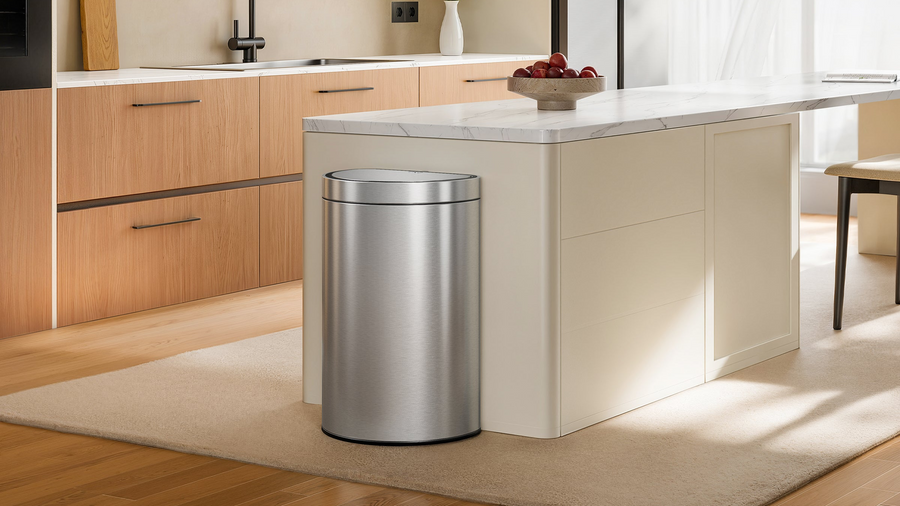
A gallon rating describes internal volume. It does not tell you the bin’s width, depth, or height. A slim rectangular 13-gallon can and a wider 13-gallon can may hold a similar amount of waste but fit very differently beside a cabinet or island.
Before buying, check four measurements: width, depth, closed height, and height with the lid fully open. If the bin will sit below a counter overhang or near shelving, lid-open height is especially important. For a step can, also leave enough room in front to press the pedal comfortably.
If space is your main concern, read our guide What Size Trash Can Do I Need for My Kitchen? for a closer look at measuring the available area and comparing bin shapes.
How Often Should You Change a Kitchen Trash Bag?
There is no single schedule that works for every household. Food residue, moisture, odor, and local collection routines all affect when a bag should go out. In practice, capacity should support the way you already manage kitchen waste rather than encourage you to keep a bag indoors longer just because there is still room.
If you routinely remove the bag before it is full because of food waste, a bigger trash can may offer little benefit. If your bags fill quickly with mostly dry household waste, a larger capacity may reduce unnecessary bag changes.
Choose a Capacity That Fits Your Routine
For many kitchens, 12 to 13 gallons provides enough room for everyday trash without taking up the space of a larger bin. Smaller capacities can suit compact kitchens, lighter waste, or households that separate recycling and compost. Larger 16- to 20-gallon cans are worth considering if you find yourself changing a 13-gallon bag more often than you would like.
Use the gallon rating to narrow down your options, then compare dimensions, lid clearance, bag compatibility, and how the bin will be used each day. If you are comparing more than capacity, see Best Kitchen Trash Cans (2026 Buying Guide) for a broader look at sensor and step cans, materials, placement, sorting, and other kitchen features.
Sources
EKO USA — Kitchen Collection
EKO USA — Trash & Recycling Collection
EKO USA — Mirage-T 50 L / 13 Gal Motion Sensor Can
Explore EKO Kitchen Trash Cans
Compare EKO sensor cans, step cans, slim designs, and dual-compartment options to find a capacity that fits your kitchen and your daily routine.