

On this page
Quick Answer:
What Size Trash Can Do You Need for a Kitchen?
For many kitchens, a 13-gallon trash can offers a practical balance of capacity and size. Smaller 5- to 10-gallon bins can make sense for apartments, under-counter areas, or households that produce less trash. A 20-gallon bin is better suited to larger households or kitchens that fill a 13-gallon bag too quickly.
Do not choose by gallons alone. Measure the space where the bin will sit, check the lid-open height, and consider how much of your kitchen waste goes into recycling or compost. The right capacity is the one that fits your routine without overflowing too quickly or occupying more room than you need.
Start With How Much Trash Your Household Actually Produces
Household size matters, but it is only part of the picture. Two families with the same number of people can fill a kitchen bin at very different rates. A household that cooks most meals at home may deal with more food packaging, paper towels, scraps, and general waste than one that eats out often. Recycling and composting can also reduce what goes into the main trash bag.
Food is a major part of the U.S. waste stream. The U.S. Environmental Protection Agency reports that food is the single most common material sent to landfills, accounting for about 24% of municipal solid waste in landfills. That is one reason food habits, composting, and food-waste prevention can noticeably affect how quickly a kitchen trash can fills.¹
Instead of choosing a bin from household size alone, pay attention to your current routine for a week. How often do you take out the kitchen trash? Is the bag full when you remove it, or are you taking it out early because of food odours? Do recycling and food scraps go somewhere else? Those answers are more useful than a simple people-to-gallons formula.
Kitchen Trash Can Size Guide
Use the ranges below as a general guide. Actual product dimensions vary by shape, lid design, inner liner, and other features.
|
Capacity
|
A Good Fit For
|
Why It Works
|
Check Before Buying
|
|
5-10 gal
|
Apartments, light waste, secondary kitchen bins
|
Compact and easier to fit in limited spaces
|
May require more frequent bag changes
|
|
10-13 gal
|
Typical household kitchens
|
Balances useful capacity with a manageable footprint
|
Compare actual dimensions and lid clearance
|
|
13-16 gal
|
Households that fill a 13-gal bin quickly
|
Adds capacity without moving straight to an extra-large bin
|
Make sure the wider or deeper body fits your layout
|
|
20-21 gal
|
Larger households or higher-volume kitchens
|
Reduces the need for frequent bag changes
|
Needs more floor space and a larger liner
|
Is a 13-Gallon Trash Can Big Enough for a Kitchen?
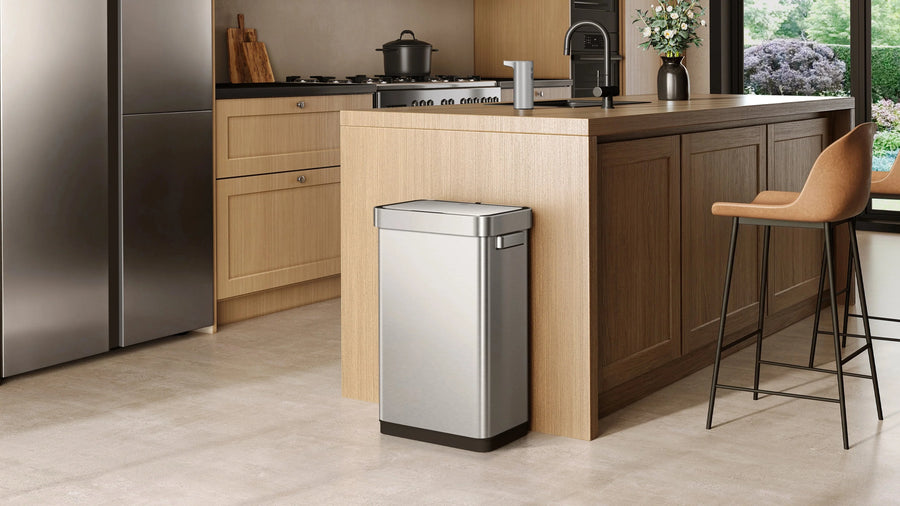
For many homes, yes. A 13-gallon bin offers enough room for regular kitchen waste while remaining easier to place beside cabinets, walls, or an island than a much larger model. It is also a common capacity across EKO’s kitchen range, including 50 L / 13-13.2 Gal sensor and step cans.²
A 13-gallon size is especially worth considering if you take the trash out every few days, separate recyclables, or have a dedicated container for food scraps. It can also be a better fit when floor space matters more than holding the maximum amount of waste.
If your current 13-gallon bag is consistently full well before you are ready to take it out, moving up in capacity may be more convenient. If you routinely remove half-empty bags because of food waste or odours, however, a larger bin may not solve the real problem.
When Does a 20-Gallon Kitchen Trash Can Make More Sense?
A 20-gallon bin can be useful when your household generates enough general waste to make 13-gallon bags feel too small. It may suit larger families, frequent home cooking, gatherings, or kitchens where packaging and other non-recyclable waste add up quickly.
The main advantage is fewer bag changes. A larger-capacity bin, however, usually needs more floor area and may extend farther from the wall or cabinet. Before moving up to 20 gallons, check whether you have enough room for the larger bin.
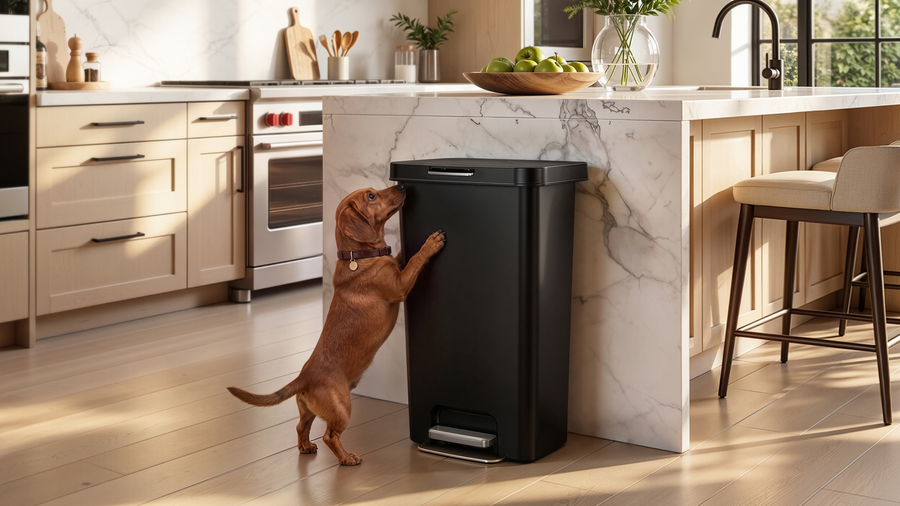
For example, EKO’s Hudson is available in a 75 L / 20 Gal version with built-in bag storage, giving households a larger-capacity step-can option.³
When a Smaller Kitchen Trash Can Works Better
A smaller bin is not only for small households. It can be the better choice when you have limited floor space, take trash out frequently, or separate much of your waste into recycling and compost.
Apartments and Small Kitchens
In a compact kitchen, every inch around cabinets, appliances, and walkways matters. A smaller bin can free up floor space, but you do not always have to reduce capacity. A slim 13-gallon design can fit into tighter spaces while still providing enough room for everyday kitchen waste.
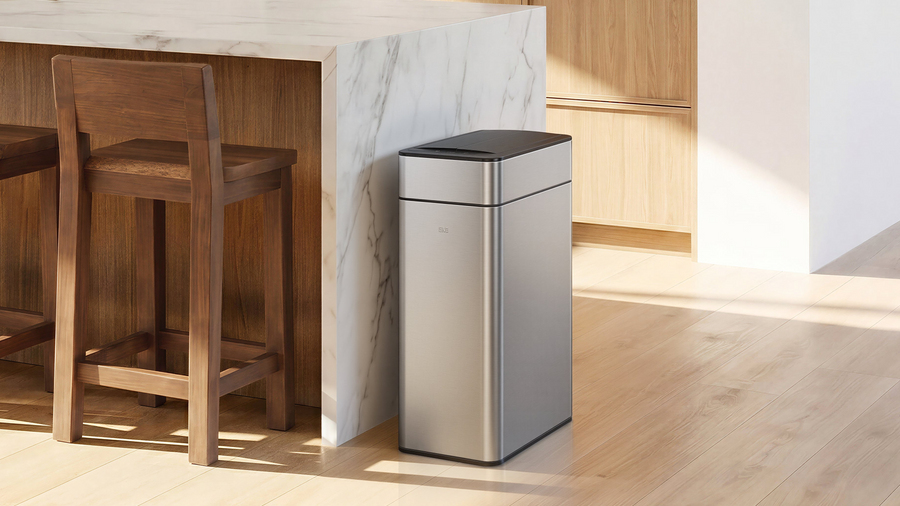
The EKO X-Wing, for example, holds 50 L / 13.2 Gal but uses a slim body and dual-wing lid designed to require less overhead clearance than a traditional single-panel lid.⁴
Households That Recycle or Compost
If bottles, cans, cardboard, and food scraps are kept out of the main trash, you may not need as much general-waste capacity. EPA guidance also encourages households to prevent wasted food where possible and compost food scraps when suitable programs are available.⁵
Before buying a larger bin, look at what is actually filling your current one. If much of the volume can be separated into recycling or compost, changing the way waste is sorted may be more useful than simply increasing the trash-can size.
Measure the Space, Not Just the Gallons
Capacity tells you how much the bin can hold. It does not tell you whether the bin will fit beside your cabinet, under a counter, or next to an island.
Two 13-gallon cans can have different widths, depths, and heights because their shapes and lid designs are different. A slim rectangular model may be taller and narrower, while another 13-gallon model may be shorter and wider.
Measure These Four Dimensions
-
Width: Measure the side-to-side space available for the bin.
-
Depth: Check how far the bin can extend without blocking a walkway, drawer, or cabinet door.
-
Closed height: Confirm that the bin fits beneath any counter, shelf, or overhang.
-
Lid-open height: Check the full height with the lid open so it does not hit the counter or cabinet above.
Lid-open height is particularly important for bins placed below a counter. A model may fit perfectly when closed and still be inconvenient if the lid cannot open fully.
Shape Can Matter as Much as Capacity
The gallon number only describes volume. Shape determines how that volume occupies your kitchen.
Rectangular
Rectangular bins work well beside cabinets, walls, and kitchen islands. Their flat sides allow them to sit neatly against straight surfaces without taking up unnecessary room.
Slim
Slim designs are useful when width is limited. They can provide substantial capacity in a narrower space by using more height or depth instead.
Round
Round cans can work well in open corners or locations where the bin is not being lined up with cabinetry. Always check the diameter and the space needed around the lid or pedal.
Think About Bag Size Before You Buy
The right trash can should also work with liners you can replace easily. Do not assume that two cans with the same gallon rating will use a bag in exactly the same way. Inner liners, bag fixers, liner rings, and the shape of the opening can all affect fit.
Check the manufacturer’s recommended liner size for the specific model. A properly fitted bag is easier to install, less likely to slip into the bin, and less likely to leave excessive material hanging over the rim.
A Simple Way to Choose Your Size
If you are still deciding, use this three-step check:
-
Start with your current routine. Note how often the kitchen trash is removed and whether the bag is usually full.
-
Measure the exact location. Record width, depth, closed height, and lid-open height.
-
Adjust for sorting. If recycling or composting removes a large portion of your waste, you may be comfortable with less general-trash capacity.
A 13-gallon bin works well for many households when it fits the available space and matches the amount of waste produced. Choose a smaller size when space is limited or you take out the trash frequently. Choose a larger size when a standard kitchen bin fills too quickly and there is enough room for the extra capacity.
Kitchen Size Examples from EKO
EKO’s current kitchen collection covers several capacities, which makes it easier to match the bin to the room rather than forcing one size into every kitchen.²
|
Example
|
Capacity
|
Useful When
|
|
Hana Select
|
50 L / 13 Gal
|
You want everyday kitchen capacity in a resin step can
|
|
X-Wing
|
50 L / 13.2 Gal
|
You want full-size capacity with a slimmer shape
|
|
Hudson
|
75 L / 20 Gal
|
You want more capacity and fewer bag changes
|
Choose a Size That Fits Your Kitchen and Routine
There is no single gallon size that every kitchen needs. The most useful choice is the one that holds enough for your routine, fits comfortably in the intended location, and works with the way your household handles recycling and food scraps.
Start with your current bag-change routine, measure the space carefully, and then compare capacities. For many households, 13 gallons offers a strong balance. Smaller kitchens or lighter-waste households may need less, while larger households may find a 20-gallon bin more convenient.
Need a broader buying guide?
Read Best Kitchen Trash Cans (2026 Buying Guide) for more on sensor vs. step cans, materials, placement, and recycling setups.
Explore EKO kitchen trash cans: Kitchen Collection