

On this page
Preview Summary
The way a trash can opens affects how you use it every day. Sensor cans are useful when your hands are wet, messy, or full because the lid responds without direct contact. Step cans open with a foot pedal and do not rely on sensor power. Swing-top lids are simple and easy to access, but opening them usually requires contact with the lid. This guide compares the three lid types for kitchen use, including hygiene, power and maintenance, placement, noise, and everyday convenience. The goal is not to name one universal winner, but to help you choose the option that fits your cooking habits, kitchen layout, and how you prefer to open the bin.
Quick Answer:
Sensor, Step, or Swing-Top Trash Can?
Choose a sensor trash can if you want touchless access while cooking or cleaning. Choose a step trash can if you want hands-free opening with a simple foot pedal and no batteries for the opening mechanism. Choose a swing-top can if you prefer a basic lid with quick access and do not mind touching or pushing the lid during disposal.
For most kitchen shoppers, the decision comes down to three questions: How often are your hands messy when you use the bin? Do you want to manage batteries? And does the bin have enough room around it for the sensor, pedal, or lid to work comfortably?
How the Three Lid Types Work
|
Lid Type
|
How It Opens
|
Main Advantage
|
Consider Before Buying
|
|
Sensor
|
A motion sensor detects your hand and opens the lid
|
Touchless access during food prep and cleanup
|
Requires batteries and clear sensor access
|
|
Step
|
Press the foot pedal to lift the lid
|
Hands-free use with a mechanical pedal
|
Needs comfortable foot access in front of the bin
|
|
Swing Top
|
Push the lid from either side
|
Simple design with quick access
|
Usually requires contact with the lid
|
The opening mechanism is only one part of the decision. Capacity, shape, soft-close features, liner design, and the space around the bin can matter just as much in daily use.
Sensor Trash Cans: Best for Touchless Kitchen Use
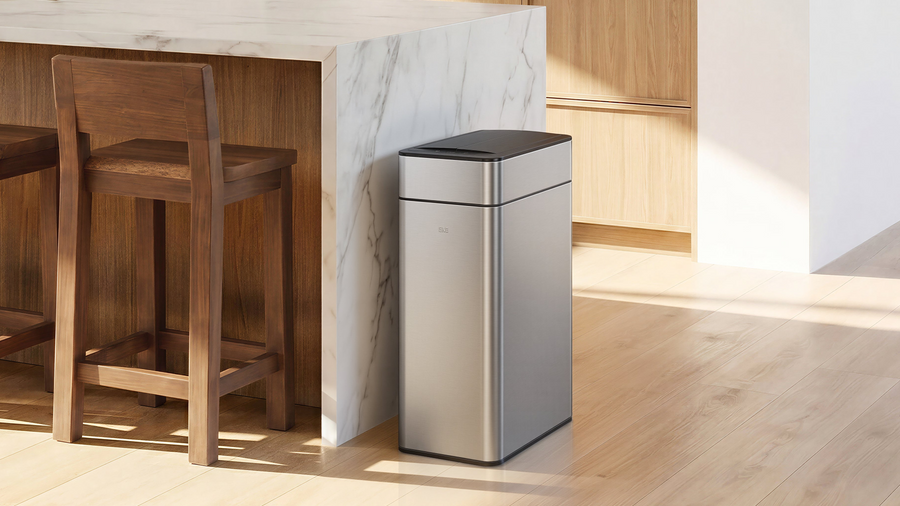
A sensor trash can opens when your hand enters the detection area. That is useful when you are trimming meat, peeling vegetables, clearing plates, or holding scraps with both hands. You can dispose of waste without reaching for the lid or pressing a pedal.
EKO sensor models such as the Mirage-T and Mirage-X are designed around this type of touchless use. EKO also offers sensor models with Manual Open or Stay-Open modes, which keep the lid open when you are handling a longer cleanup task or changing the bag.¹
What Are the Main Benefits of a Sensor Can?
-
Less lid contact: You do not need to touch the lid during normal disposal.
-
Useful during food prep: The lid responds while your hands are wet, messy, or occupied.
-
Controlled closing: Many EKO kitchen sensor models pair motion sensing with a soft-close lid.
-
Stay-open options: Selected models can keep the lid open for longer cleanup tasks.
What Should You Consider Before Buying One?
Sensor cans need batteries. Current EKO kitchen sensor models include options that run on AA alkaline batteries; for example, EKO lists up to 8 months of performance from 4 AA alkaline batteries on selected 80 L models.² Battery life varies with the model and how often the lid is used.
Placement also matters. Avoid positioning the sensor where nearby movement may trigger the lid when no one is using the bin. Check the product dimensions and sensor location before placing it beneath a counter or in a busy walkway.
Step Trash Cans: Best for Simple Hands-Free Opening
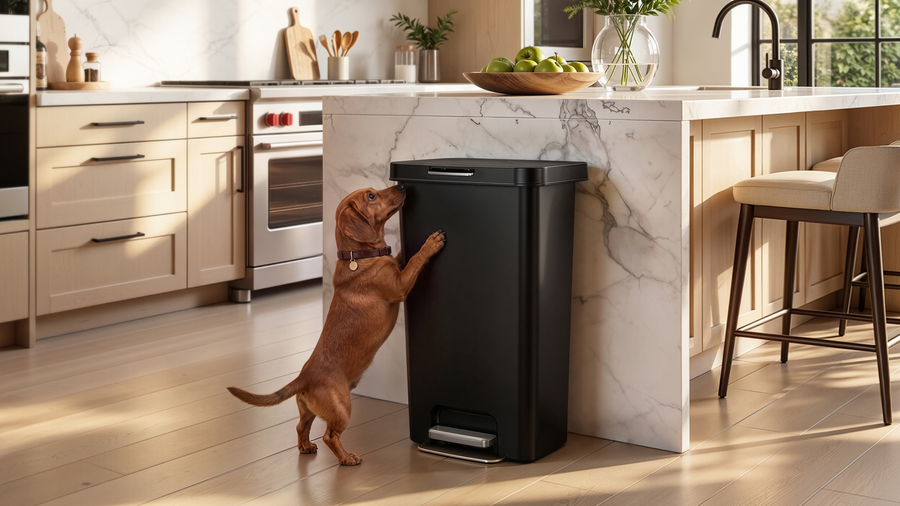
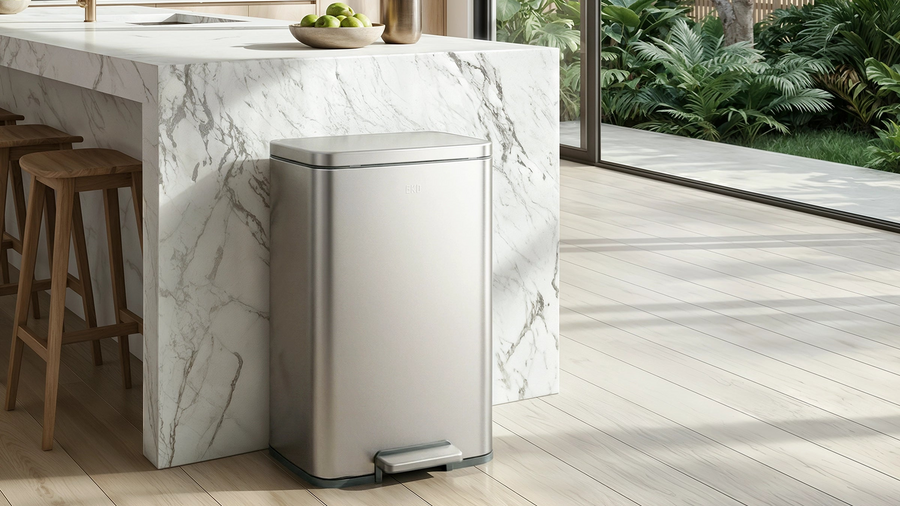
A step can opens when you press the pedal with your foot. It still keeps your hands away from the lid, but the opening action is mechanical rather than sensor-controlled.
This makes a step can a strong option for households that want hands-free disposal without batteries. EKO currently offers step cans in a range of kitchen capacities, including 50 L / 13-gallon and 75 L / 20-gallon models.³
What Are the Main Benefits of a Step Can?
-
Hands-free access: Press the pedal while your hands are holding food scraps or packaging.
-
No sensor batteries: The pedal operates mechanically.
-
Predictable opening: The lid opens when you press the pedal, so nearby motion does not trigger it.
-
Useful feature options: Soft-close lids, stay-open functions, liner rings, and bag storage are available on selected EKO models.
What Should You Consider Before Buying One?
Make sure there is enough room in front of the bin to use the pedal comfortably. A step can pushed too tightly beneath a cabinet overhang or into a narrow corner may be harder to use even if the body itself fits.
Pedal durability is also worth checking if the bin will be used frequently. For example, EKO lists the stainless steel pedal on the Hudson Slim as tested for more than 200,000 steps.⁴
Swing-Top Trash Cans: Simple, Quick Access
A swing-top lid pivots when you push it and returns to its resting position after the item passes through. There is no sensor or foot pedal, with fewer components to maintain.
This type of lid works well when you want quick access and do not need touchless disposal. It can also be useful for pantries, utility rooms, or other areas where touchless opening is not a priority. EKO’s Fandy table bin is one example of a compact swing-top design in the current collection.⁵
What Are the Main Benefits of a Swing-Top Lid?
-
Simple design: No sensor setup or pedal mechanism is required.
-
Quick access: Push the lid from either side to dispose of small everyday waste.
-
Works well at smaller sizes: Compact swing-lid bins work well on countertops or in smaller spaces where a full-size kitchen can is unnecessary.
What Should You Consider Before Buying One?
The main difference is contact. Your hand or the item being discarded usually pushes the lid, so it is not as hands-free as a sensor or step can. For food-prep areas where avoiding lid contact is a priority, a sensor or pedal model may suit your routine better.
Which Lid Is Better for Hygiene?
If reducing contact with the trash can is the priority, sensor and step cans both keep your hands off the lid during normal use. A sensor can goes one step further by opening without requiring your foot to press a pedal, which can be convenient when you move around the kitchen frequently while cooking.
A swing-top lid usually involves more contact because the lid has to be pushed. Regardless of lid type, regular cleaning still matters. The CDC recommends cleaning visibly dirty household surfaces before disinfecting when needed, and handwashing remains important after handling trash or cleaning waste areas.⁶
In other words, the lid design can reduce contact, but it does not replace normal kitchen cleaning and hand hygiene.
Which One Requires the Least Maintenance?
A swing-top lid has the simplest mechanism of the three. A step can uses a pedal and hinge, while sensor models rely on batteries and electronic controls.
That does not mean sensor cans require constant attention. Battery-powered EKO models are designed for long intervals between battery changes, and the day-to-day care of the body and liner area is similar to other kitchen bins. The main extra task is replacing the batteries when needed.
For step cans, keep the pedal area clear and wipe away spills that could collect around the base. For swing-top models, clean both sides of the lid because discarded items may come into contact with it.
Which Lid Works Best in Your Kitchen Layout?
The same lid can feel convenient in one location and awkward in another. Check the space around the bin before deciding.
|
Kitchen Location
|
What to Check
|
Lid Type to Consider
|
|
Beside a cabinet or wall
|
Enough room above for the lid; sensor should face an open area
|
Sensor or step
|
|
Beside a kitchen island
|
Place the bin where it won’t get in the way, and make sure there’s enough room to step on the pedal comfortably
|
Sensor or step
|
|
Under a counter overhang
|
Compare lid-open height with available clearance
|
Low-clearance sensor design or another compact lid
|
|
Pantry or utility area
|
Decide whether touchless access is necessary
|
Swing top or compact sensor
|
If the bin will sit beneath a counter, do not rely on the closed height alone. Check the height with the lid fully open. A dual-wing lid can also reduce the vertical space needed compared with a single full-width lid on some designs.
Sensor vs. Step vs. Swing Top: Side-by-Side Comparison
|
Feature
|
Sensor
|
Step
|
Swing Top
|
|
Hands-free use
|
Yes
|
Yes
|
No
|
|
Batteries needed
|
Yes, on battery-powered models
|
No
|
No
|
|
Useful during food prep
|
Excellent
|
Very good
|
Basic
|
|
Accidental opening
|
Possible if poorly positioned
|
No sensor activation
|
Not applicable
|
|
Simple mechanism
|
More components
|
Mechanical pedal
|
Simplest
|
|
Common kitchen use
|
Primary kitchen bin
|
Primary kitchen bin
|
Often used in smaller spaces
|
Which Trash Can Lid Fits Your Routine?
Choose a sensor can if you regularly cook, handle food scraps, or want the least contact with the lid. The touchless response is most noticeable when both hands are busy or messy.
Choose a step can if you want hands-free access but prefer a mechanical pedal. It is also a good fit if you do not want batteries to be part of your trash-can routine.
Choose a swing-top can if you value a simple lid and do not need fully hands-free disposal. It also works well in pantries, utility rooms, or other areas where touchless opening is not a priority.
After deciding on the lid, compare capacity, dimensions, liner design, and the space available in your kitchen. If size is still the main question, see What Size Trash Can Do I Need for My Kitchen? For a broader buying overview, see Best Kitchen Trash Cans (2026 Buying Guide).
Sources
1. EKO USA — Sensor Cans collection and product support information.
2. EKO USA — EcoSmart / Nova 80 L sensor product pages: selected models list up to 8 months of performance with 4 AA alkaline batteries.
3. EKO USA — Step Cans collection: current kitchen sizes include 50 L / 13-gallon and 75 L / 20-gallon options.
4. EKO USA — Hudson Slim 50 L / 13.2 Gal Step Can product page: stainless steel pedal tested for 200,000+ steps.
5. EKO USA — Trash & Recycling collection: Fandy Table Bin with Swing-Top Lid.
6. Centers for Disease Control and Prevention — guidance on cleaning and hygiene in the home.